Monday, December 14, 2009

Are We There Yet?


"The hurdles are finding the political will to rip out the old energy economy and put in a new one — and finding the money to pay for it.

Building clean coal or nuclear power plants is very expensive. Many of the nation's existing coal plants still need to operate for years to pay off the debt incurred to build them.

Making wind and solar power affordable and accessible will also cost a lot of money. And a limit on greenhouse gas emissions for industry will, at least for a long time to come, raise the price of energy." -NPR.org

There is no point in sugarcoating the truth. Representatives from nearly 200 countries

are rendezvousing in Copenhagen for two weeks to finagle over the global warming issue and attempt to overturn the Kyoto Protocol, a policy that expires in 2012.

"About half the electricity Americans use comes from burning coal. China depends on coal even more and is building new coal-fired power plants at a furious rate. Yet burning coal puts out more greenhouse gases than does any other single source of electricity.


Most energy analysts argue that the nation can't just turn off its coal plants and replace them in a hurry. The solution, according to the Department of Energy, is in part to switch to "clean coal." That generally means using coal in a different way — not burning it, but extracting energy from coal chemically, while diverting the carbon dioxide from the coal and burying it instead of letting it go up into the atmosphere."

So while it is decent and progressive to consider alternative resources, we must approach the most practical solution at the present moment: clean coal. Of course, as everyone knows, "clean coal is like dry water." Who wants to tackle China's resource quandary? America cannot even afford to take care of its own coal-dependency problem! Furthermore, funds would need to be pumped into the "carbon capture and sequestration," or CCS process, in which CO2 would be pumped underground in "out of sight, out of mind" fashion.

"Currently, the United States gets about 20 percent of its electricity from nuclear power plants, which do not emit greenhouse gases. The Obama administration is on record saying that new nuclear power plants are "in the mix" in its plans to lower the energy economy's carbon footprint. Nuclear power has popular support in Congress as well, and a few environmental groups are reconsidering it in light of its carbon "neutrality."

However, no one has built a new plant in the United States in decades. Besides concerns about the environment and nuclear waste, the reluctance of investors to pay for nuclear construction has stifled growth of the industry."

Wind and solar power are not faring so well either. For being ephemeral resources and mainly obtained from the sunny and windy southwest and Big Plains regions, the northeastern and Midwestern states do not reap the benefits of these Eco-friendly energy products. Electricity grids would have to be constructed to reroute wind and solar energy, a project that could take decades and estimated to cost a whopping $100 billion.

"The primary means of reducing greenhouse gases under the Kyoto Protocol is a cap on the amount of greenhouse gases emitted by industries. Signatory countries have targets for the period 2008 to 2012 for lowering emissions.

Most of the offsets sold internationally have been projects that limit greenhouse gases from factories, landfills or livestock waste ponds. Recently, many groups are trying to add forest management and agricultural practices to the list of allowable offsets. For example, a program called REDD (Reduced Emissions from Deforestation and Degradation) is being negotiated by environmental groups and businesses. It would essentially pay tropical and other developing countries not to cut down forests as fast as they have in the past.

Changing the way land is used is another way to generate carbon credits or offsets, since land and what grows on it can influence the flux of carbon into and out of the atmosphere. Experiments are under way, for example, to boost the rate at which grasslands and soil take CO2 out of the atmosphere. If that takes extra CO2 out of the atmosphere, it would generate carbon credits. No-till farming also might keep more greenhouse gas in the soil than conventional tilling, since it doesn't disturb the soil as much and thus keeps more carbon out of the air."

All excellent ideas: managing energy efficiency at the global corporate level, condoning anti-logging practices, and encouraging sustainable agriculture, inject creative thought into the quest for reducing the massive carbon footprint. Currently, 80% of carbon emissions are produced by 10 countries, including China, Russia, and the U.S. Sadly, we do not have an infinite amount of time to ponder over this conundrum and as our resources wane, the populations increase, and the obstacles to finding cost-efficient and environmentally sustainable production of energy seem insurmountable, our future appears pretty bleak.

Giant Lobsters


Carbon emissions prompt lobsters to develop thicker shells, thus enabling them to grow nearly 50% larger than normal exoskeletons. Simulated environments with high levels of carbon also precipitate bigger crabs and shrimps. While this might be good for the restaurant business, it doesn't necessarily mean that such large crustaceans will thrive in their natural habitats. While CO2 is beneficial for exoskeleton growth, clams, scallops, oysters and other "calcifiers" developed thinner shells under extended exposure to high levels of carbon. Incidentally, these species form a great portion of the lobster's diet. What bittersweet, global-warming irony...
Check the article out at NPR.org: "Giant Lobsters From Rising Greenhouse Gases?"

Sunday, December 13, 2009

Science Meets Art!!

Fantastic! A botany major rescinds great dreams of scientific grandeur for art making! It is kinetic art that utilizes the forces of nature (the phenomena of pendulums, gravitational and concentric pulls, e.g.). Ned Kahn even uses the aesthetics of auditory stimuli in his work. The sculpture depicted is made out of teak wood. Formed to be a "turbine" of sorts, the material was steamed and then warped into the inwardly spiraling shape.


"Artists use their creativity to reveal the world in new and sometimes unexpected ways. Artist Ned Kahn's work focuses on the physical world. From the harmonies of randomness to the dynamics of the Earth's crust, Kahn uses scientific principles to create mesmerizing works of art.

Kahn started out in college as a botany major, but gave up when he saw the three-inch-thick textbooks filled with Latin names. After graduating from the University of Connecticut, he headed west. One day he stumbled into the Exploratorium, a San Francisco museum dedicated to the natural world and the forces that shape it, and he was hooked. He begged for a job and was offered an apprenticeship with one of the machinists who built the exhibits.

Kahn's first piece for the museum was enormously popular -- a metal bar dipped into a trough of soapy water, then hoisted into the air by ropes on either side. A giant film of soap would stretch from bar to trough. With just the right lighting, patterns and colors would reveal themselves dancing across the film.

Dozens more exhibits followed. Chaotic pendulums, smoke vortexes, wind-sculpted dunes. Most of the pieces are visual, but some are musical.

One such work, on display recently at the Sebastopol Center for the Arts in Northern California, consists of a spinning disk and tiny steel bearings. The balls drop through a grid of nails, creating tinkling musical sounds as they fall. Kahn says the work had started out as a math demonstration, "but the sound these nails made in this board was compelling."

Kahn says he's most satisfied when people see his work and share that sense of wonder and delight that he feels for the processes of nature.

"I've tried to create things where I've basically framed a phenomena, and I'm letting nature do the sculpting," he says.""


"Science and Art: An NPR Article"

Saturday, December 12, 2009

Alternative Modes of Transportation


I get it! You can be a walking pedestrian and a cyclist at the same time! And this is recycled art, right? While some people casually toss their worn shoes into the trash, this anonymous clever fellow came up with an ingenious way to fix his flat bike tires and utilize worn-out shoes.

Thursday, December 10, 2009

Welcome to Kentucky


For the past eight years, my family has lived on a 100-acre farm in LaRue County Kentucky, near the small town of Hodgenville (birthplace of Abraham Lincoln). Over the years, we have noticed a startling change in the landscape: trees are being cut down rapidly, logging roads delving into the depths of the deep old-forest growth, and felling many ancient trees. Our property has become an island of sanctuary, prohibited from loggers. We even keep hunting on our land to a minimum. We hope that by keeping evasive human involvement to a minimum (save for the livestock and animals we have introduced to the land) endangered species will have a small chance of establishing a foothold in the hills of rural central Kentucky. Think we don't have any threatened organisms in our state? The US Fish and Wildlife Service's Endangered Species Program has compiled a list:

Bat, gray (Myotis grisescens)
Bat, Indiana (Myotis sodalis)
Bat, Virginia big-eared (Corynorhinus (=Plecotus) townsendii virginianus)
Bean, Cumberland (pearlymussel) (Villosa trabalis)
Beetle, American burying (Nicrophorus americanus)
Catspaw (=purple cat's paw pearlymussel) (Epioblasma obliquata obliquata)
Clubshell (Pleurobema clava)
Combshell, Cumberlandian (Epioblasma brevidens)
Crane, whooping (Grus americana)
Curlew, Eskimo (Numenius borealis)
Dace, blackside (Phoxinus cumberlandensis)
Darter, relict (Etheostoma chienense)
Eagle, bald (Haliaeetus leucocephalus)
Elktoe, Cumberland (Alasmidonta atropurpurea)
Fanshell (Cyprogenia stegaria)
Mapleleaf, winged (Quadrula fragosa)
Mucket, pink (pearlymussel) (Lampsilis abrupta)
Mussel, oyster (Epioblasma capsaeformis)
Mussel, scaleshell (Leptodea leptodon)
Pearlymussel, cracking (Hemistena lata)
Pearlymussel, dromedary (Dromus dromas)
Pearlymussel, littlewing (Pegias fabula)
Pigtoe, rough (Pleurobema plenum)
Pimpleback, orangefoot (pearlymussel) (Plethobasus cooperianus)
Plover, piping (Charadrius melodus)
Pocketbook, fat (Potamilus capax)
Puma (=cougar), eastern (Puma (=Felis) concolor couguar)
Riffleshell, northern (Epioblasma torulosa rangiana)
Riffleshell, tan (Epioblasma florentina walkeri (=E. walkeri))
Ring pink (mussel) (Obovaria retusa)
Shiner, palezone (Notropis albizonatus)
Shrimp, Kentucky cave (Palaemonias ganteri)
Sturgeon, pallid (Scaphirhynchus albus)
Tern, least (Sterna antillarum)
Wartyback, white (pearlymussel) (Plethobasus cicatricosus)
Wolf, gray (Canis lupus)

Transgenic-Eduardo Kac

Eduardo Kac, creator of the Fluorescent Green Protein bunny named Alba was the inspiration behind this design as part of the final project for the Media, Issues, and Sustainability class. Kac was also responsible for the work Genesis, in which a scripture of the Bible was translated via morse code into a DNA codified strip of information that was injected into continuously growing bacteria. Every time a person logged onto the website of the the Genesis Project, a light would shine on the petri dish where the organisms were flourishing, thus prompting them to "evolve" and be genetically manipulated by the humans from afar. We might consider common household domestication to be a slightly less controversial form of transgenic artwork...

"Poo Power"

"Fecal Matter has Great Potential Energy"

Sewage plant
The waste is processed and made into blocks which are burned

A water firm says it saved £15m last year - by using human waste to make electricity.

In 2008/09, Thames Water generated 14% of its power from either burning sludge or methane derived from the 2.8 billion litres of sewage it treats every day.

The company hopes the move will ultimately help it cut greenhouse gases by 20%.

More than 13 million people in London, Berkshire, Oxfordshire, Hertfordshire and Surrey are served by Thames Water.

Dr Keith Colquhoun, Thames Water's climate change strategy manager, said: "There's no polite way of saying this but what we produce - our poo - isn't simply waste, it's a great source of energy.

"The solids in sewage have a high calorific content that we use to generate electricity.

"This isn't a gimmick. As well as helping us to be more sustainable as a company, it also saves money - £15m less of customers' cash spent on National Grid energy last year alone, which ultimately has a downward pressure of bills.

"Our goal is to cut greenhouse emissions by 20% on 1990 levels by 2020 - that's about 200,000 tonnes less CO2.

"By using poo power and other renewable energy sources, we're making significant progress towards this target."

-BBC News online

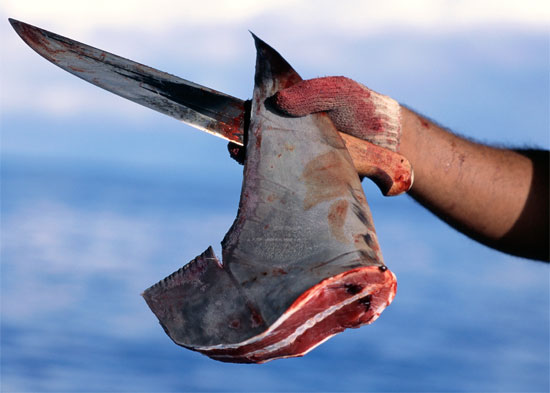
Photographer Norbert Wu


"Shark Fins Left to Dry"

The link goes to the photography site of Norbert Wu, the professional photographer who was rewarded the "Pew Marine Conservation Fellowship, the world's most prestigious award in ocean conservation and outreach. Through 2003 he used this grant to document, in stills and high-definition video, the world's most unique and threatened underwater habitats, assembling a large library of images related to marine conservation." These images are slightly disturbing and definitely disheartening when we speculate about our greedy preoccupation with the fruits of the sea, including shark fin soup and other delicacies that fetch a high price on the global market. Culture and cohabitation conflict when the demand for ocean resources exceeds the amount of organisms (sharks, loggerhead sea turtles, sword fish...) trying to survive and keep the precarious food chain in balance.

Sympathy is our greatest survival method

"We Are Sympathetic Species"
Interesting article about altruism and the evolutionary benefits it has bestowed on us. Could this explain our empathy for the people who don't even exist, i.e. our progeny, the proverbial people who will inherit the earth when we pass away? Could this be our reasoning why we seek sustainable solutions, macro-managing and foreseeing a future with limited resources?

Where is my mind?

I just realized how unusual it has been for me this past semester. I have not openly discussed religion with too many people in any of my art classes. Always a pervasive issue, many of my peers considering I have an irritating chip on my shoulder, I have actually been very reticent about my zealous atheism. Lest we forget the wacky people out there who are more foul-mouthed and choleric as me... science fiction writer, Harlan Ellison.

Sunday, December 6, 2009

Recycling Doesn't Work: Ultimate Fail


"The Recycling Conundrum"

So the National Post has declared that recycling is just a waste of funds and Co2 emissions skyrocket due to the need for surplus garbage vehicles and other required recycling implements. Plastic is cheap. Aluminum and paper are the items that need to be recycled. This is depressing. To come to the conclusion of this class to discover an article that reveals how futile it really is to try to maintain a sustainable lifestyle and community initiatives just supports my nihilism. So what do we do with recyclable materials? Turn it into art.